Marsh Fritillaries Still Going Strong

The Marsh Fritillaries that have been around for a while now seem to have faired better in the strong winds than the Adonis Blues. Some do look pretty battered, but others look fresh still.

Here’s one I caught just as it was taking off, presenting an almost 3D effect against the dotted yellow background of Horseshoe Vetch. 

There are flowers on the downland everywhere at the moment, including a little white five-petalled species with yellow stamens which I hadn’t noticed before, and which I think is called Fairy Flax (you can see them at the bottom of the picture of the Fragrant Orchid below). The various plants all seem to have their different strategies for survival and reproduction on the plain. The tiny Fairy Flax seem to keep their heads right down – maybe for protection for when the winds blow hard, or maybe to avoid the teeth of the munching cattle which graze here from time to time. The burnt Tip Orchids, that have been around for about three weeks now, keep fairly low as well – perhaps, coming out earlier in the year, they’re more likely to experience high winds. The Fragrant Orchids, which have only just started to appear, stand taller. Could it be that for them, blooming a little later, they’re less likely to be damaged by storms? Maybe being fragrant, they need to get up there to catch the evening breeze, advertising their presence to pollinators. Or maybe they just have more flexible, stronger stems. Whatever the reasons behind the various strategies, it all seems to work pretty well. The slopes are full of life and colour right now – without doubt, my favourite time of year.

Talking of orchids, we now have a mystery plant – possibly an orchid – that has appeared in the soil of our bay tree pot plant just outside my office window. It has spotted leaves with flower buds that, at this stage, look white. How it got there, we have no idea. There are no orchids in the field that I’m aware of. What kind of an orchid turns up in a potted plant in our garden? Could it really be an orchid? We will find out shortly.
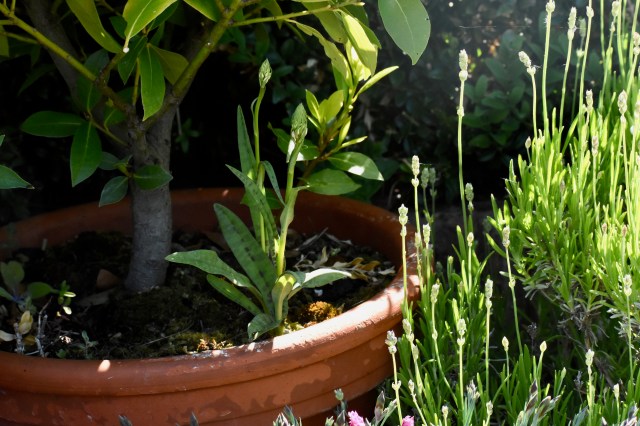
Mystery plant in our bay tree pot.

Photography’s Reality Distortion Field

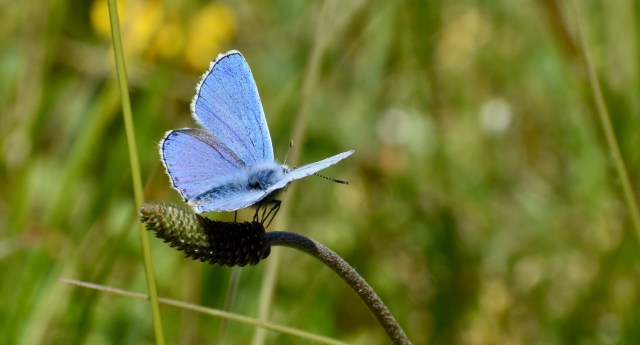
Looks like the Adonis Blues took a bit of a hammering in the high winds we had recently. I was at our local Site of Special Scientific Interest yesterday and there were, as I’d heard, numerous Adonis Blues on the wing.

I took a few pictures but came across none that were in really mint condition. The wing edges of even the shiny, fresh ones looked frayed. No surprises really as winds here gusted to 40 MPH for a couple of days. In the sheltered valley where we live, the blustery wind managed to break a substantial branch – ten or twelve foot long – off a willow tree next to our garage. The wind must have been quite violent on the exposed downland. 

Edges frayed so that the usual checkered fringe is no longer visible.
Lovely pale blue fur though.

But of course the animals and plants that live there have adapted to the conditions. I noticed this time that the Buttercups on the site really do hug the ground – just a couple of inches or so off it – whereas in the field next to us, in the valley, there are Buttercup plants two to three foot tall. Don’t know if they’re the same or similar species (must check it out), but they have very different dimensions. Of course, individual plants adapt to the particular environment in which they find themselves. Plants that are cropped by grazing animals (or lawn mowers) produce shorter flowering stalks at their next attempt – but I wonder whether there is also some local selective pressure that favours the genes of plants with shorter flower stems. A question of balancing the advantages of attracting pollinators with higher more visible flowers against the likelihood of being snapped off in a strong wind – a kind of evolutionary Tall Poppy Syndrome.

There’s another aspect of flower heights that occurred to me, which is probably not quite as academic as questions of Survival of the Fittest. It’s to do with how accurately photographers represent their subjects’ environment.

At this time of year, during their first emergence, Adonis Blues spend much of their time sipping the nectar of the Horseshoe Vetch (which is their caterpillar food plant and which, not surprisingly, there are plenty of where you find the Adonis). They seem to me to spend more time on these bright yellow flowers, which grow close the ground, than on any other. The problem for the photographer is that when the flower they’re attracted to most is so close to the ground, it’s difficult to achieve a nicely thrown-out-of-focus background. And their being in amongst the matt of ground foliage, you often get other plants obscuring your view and throwing shadows on to your subject. As a result you tend to spend most of your time looking, and waiting, for butterflies that have perched on something taller – grass seed heads, or taller flowers.

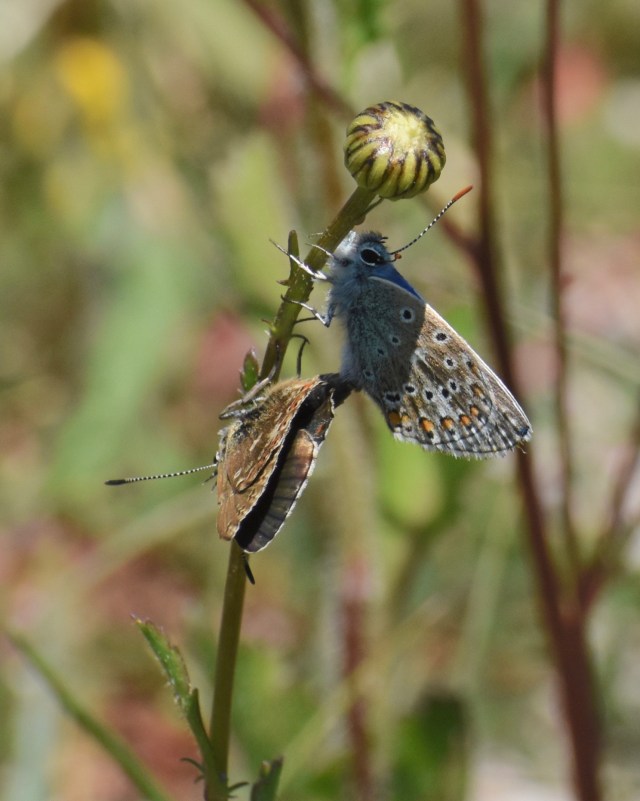
You can see that the image on the right with the Adonis perched on a Horseshoe Vetch flower is a bit muddled with the in-focus grass stems all around, one of which is casting a shadow over the butterfly itself. Not ideal. But perhaps it’s a truer image of the butterfly in its habitat than the one at the top of the blog which is a better picture. There is also a heavy shadow on the central image of a mating pair, which isn’t great either, but I’ve included it here because you can see how vividly orange the underside of their antennae tips are – it came as a surprise to me.

Does it matter that the pictures you end up with are not particular representative of the butterfly’s habits and habitat or their flower nectar preferences? Not sure. Probably not. But that was certainly the case for the selection I took yesterday. Aesthetic considerations distorting reality? Nothing particularly new there: don’t let facts get in the way of a good story; don’t let Nature get in the way of a good image.

Battered male Adonis, perched on a grass seed head

In the above image of an Adonis on a grass seed head, we can see evidence of all the Horseshoe Vetch plants in the background – maybe the best of both worlds.

Tiny and Delicate

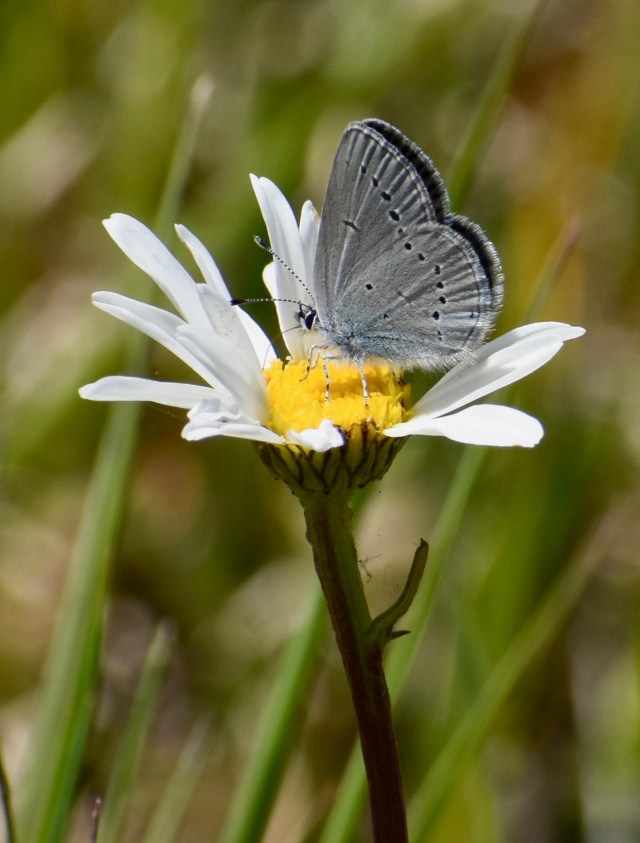
Britain’s smallest butterfly.


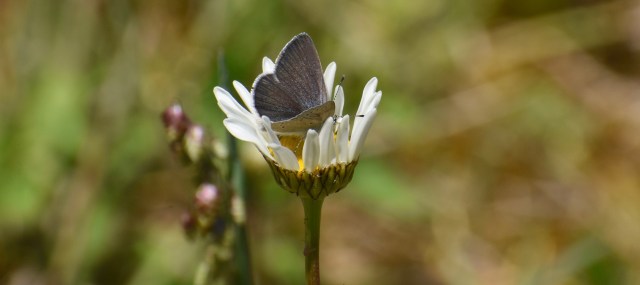
Sipping nectar in a daisy cup

I didn’t manage to get a picture of a Small Blue last year. Got close a couple of times, I think. But the “ones that got away” meant getting an identifiable photo of the Small Blue was on my Geek-To-Do list for this year. And a couple of days ago I ticked it off. 

A neighbour who’d promised last autumn to take me this year to a Small Blue site he knew, phoned to tip me off that he’d seen them on the wing the previous day. He mentioned that the butterflies seemed to stop flying after about three in the afternoon, so I’d have my best chance of seeing them if I got there with a bit of time to spare.  Grid reference and directions received, I set off. 

I found the site without any trouble, parked and after a walk of less than a hundred yards, there they were. Once you know where to look, it makes it a whole lot easier to find what you’re looking for.

I was surprised by how relatively easy they were to spot. Tiny though they are, their dark upperwing makes them easier to see than other small butterflies like the smaller skippers with their more neutral, dappled tones.

I saw twenty or more while I was there. Not too many of them were resting with their wings open – I’m guessing they’d done most of their warming up for the day by then – but one or two were. I noticed that the steeply sloping bank of the site was facing East, so it would have warmed up and cooled down a bit earlier in the day than on the flat. Maybe that’s why they were going to roost mid afternoon-ish.

So a good trip. And one that was not just a first for me in getting a positive ID on a Small Blue. I haven’t travelled specifically to see butterflies at a particular site before now either. My interest in the subject has come about as a result of dog-walking locally and happening to live on the edge of Salisbury Plain with its unusually rich variety of wild life. So could this be the start of something new? I can’t really imagine myself being drawn into the world of amateur enthusiast Lepidopterists. On the other hand I know there are Purple Emperors in Savernake Forest which is only about half an hour away…

It’s a Chill Wind…

Turns out there’s an upside to this chilly North Easterly wind: butterflies are landing in the garden again.

Landing, that is, rather than flitting endlessly about, as if they’re thinking “here? Or maybe on that flower, or perhaps there, on that nice blade of grass?”. They do it for just long enough that you’re sometimes tempted to get after them with a camera for the moment when they do finally alight. Only to see them go flitting off again, up and over the hedges and houses and far away. Which is pretty much exactly what they’ve been doing in the warm sunny weather we’ve been having here in the South of England for the past few weeks.

There are exceptions: the Peacocks and the Commas seem quite happy to chill out and bask in the sun. The Whites and Brimstones and the Holly Blues, though, hardly ever seem to come to rest in the warm sunny weather.

But now, with the drop in temperatures, and the patchy sunshine, they’re offering photo opportunities again.

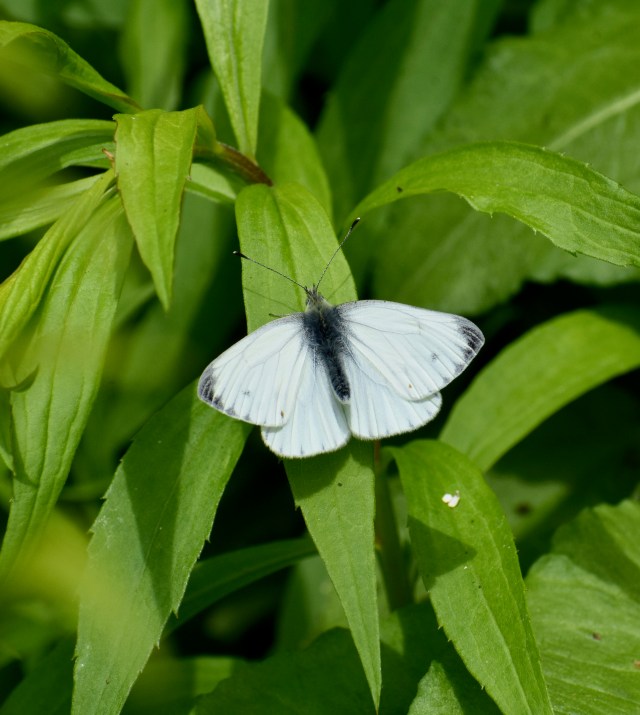
A green Veined White enjoying our Forget-Me-Not bed.

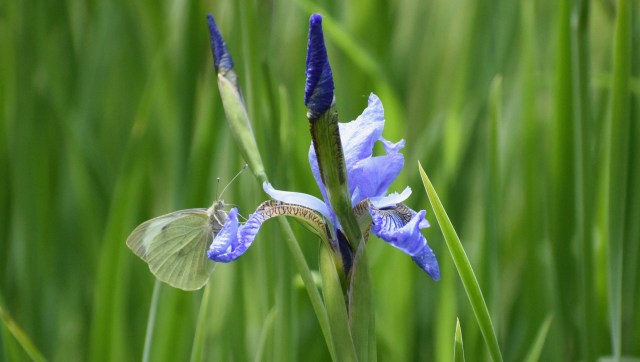
Quite a few more Large Whites about than this time last year. They seem as likely to land on foliage as a flower.

Large White in amongst freshly in-bloom Irises

Haven’t seen a Small White yet. But there are quite a few female Orange Tips about. And they have a useful habit of landing on the tips of foliage or on isolated flower heads, which means the backgrounds are nicely thrown out of focus.

Female Orange Tip (with small fly) on budding Cow Parsley

So, lesson learned about warm sunny weather and some butterflies rarely coming to rest. And the silver lining of a change in the weather to “cooler temperatures, cloudy with some sunny intervals”.

A smiling Holly Blue

More of an impish grin really. Unless of course she’s popping out an egg or two and it’s a grimace.

Not sure.

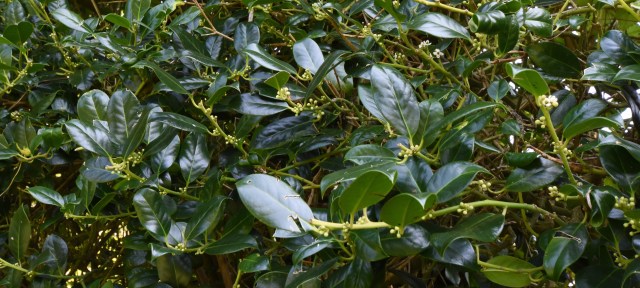
Holly seems like a tough food plant for such a delicate creature, but apparently the caterpillars prefer the flowers to the leaves which, judging by the number of buds on the holly right now, they won’t be short of.

Unusually for butterflies, Holly Blues lay their eggs on a different food plant, in their case ivy, for the second brood in the autumn. Conveniently, ivy flowers at that time of year so the caterpillars can nibble away on flowers in the autumn as well.

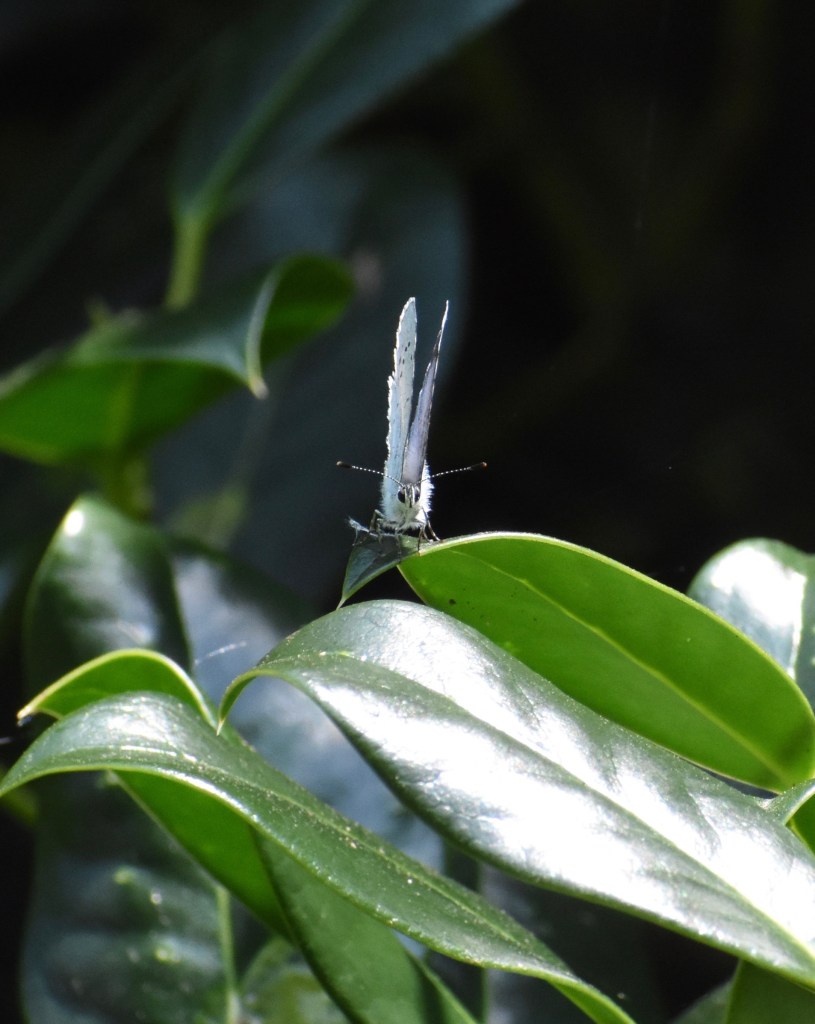
This particular Holly Blue female was flitting around a tall Holly Bush at the end of the garden and being pretty indecisive about where or when to land. When she eventually did, she was good enough to find a sunny spot which illuminated her against the shadows. Here’s another shot, this time face on.

You can see from the size of those holly leaves just how tiny these butterflies are.

Perhaps it wasn’t a Wall after all.

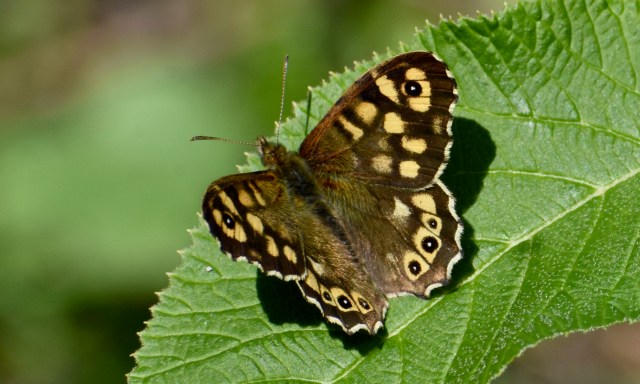
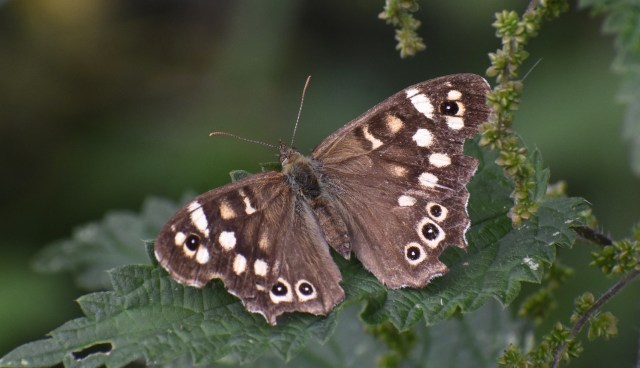
I was walking the dogs along a sheltered track a couple of days ago – mostly in shade, with pools of sunlight here and there – when I came across a succession of Speckled Woods, darting about and chasing each other at the edges of their territories. I was struck by how orangey their colouring was and how crisp and clear the markings were generally – compared, that is, to the individuals I’d seen and photographed last September. And I hadn’t previously noticed the wavy white fringe to their wings which gives them a neater, more defined appearance.

Speckled Wood, mid April
Speckled Wood, early September

It made me wonder if the butterfly I’d glimpsed briefly when it came to rest in the garden about a week ago, and which I’d thought was a Wall Brown at the time (no camera to hand for a more definite ID) was actually an orangey and freshly emerged Speckled Wood. The timing suggests it probably was: Speckled Woods can appear as early as late March, whereas the Wall Brown doesn’t normally emerge before May.

Wall, Mid August

I’d thought it was a Speckled Wood initially, as it flew past, and it was only when it landed at the back of a flower bed and I caught a glimpse of how orange it was that I thought it was a Wall. Their marking are superficially similar, and the sunlight can of course make everything appear more orange at times. And freshly emerged butterflies are always more vivid. So I’m pretty convinced now it was a Speckled Wood.

I won’t be adding the Wall to my geek list of species we’ve seen in the garden just yet.